The Time-Blocking Mistake That Turns Your Sunday Reset Into a Second Job

Quick Answer: A Sunday reset works best capped at 2-3 hours total, split into short blocks with breathing room between them — not a back-to-back task list that turns your day off into unpaid admin work. Overloading it is the single most common way people burn out on the habit.
Sunday reset content online often shows color-coded schedules packed from 9am to 6pm, which looks productive but usually backfires — most people quit the habit within a month because it stops feeling different from a workday.

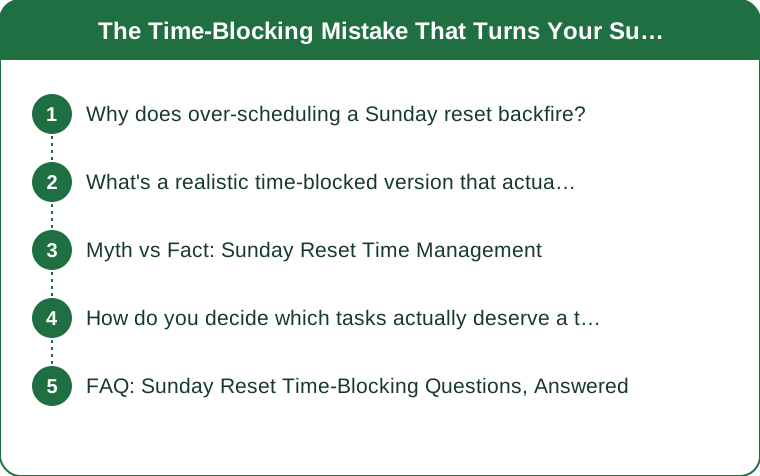
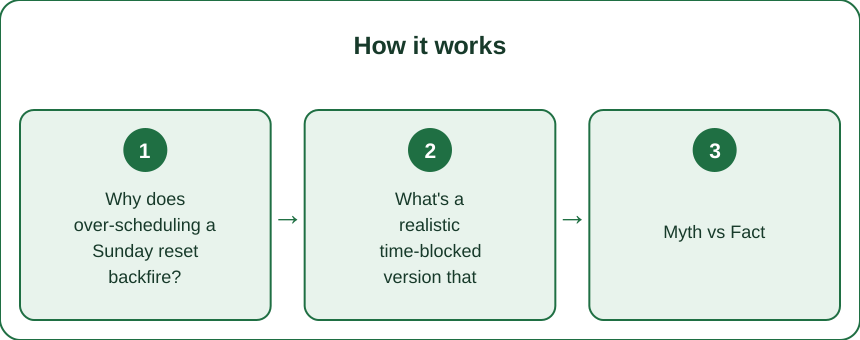
Why does over-scheduling a Sunday reset backfire?
When every hour has an assigned task, the day stops functioning as recovery time and starts functioning as a second to-do list — which defeats the entire purpose of resetting before a new week. The mental relief people actually want from a Sunday reset comes from finishing it with time left over, not from filling every available minute.
This is why the habit often fades by week three or four: it was never sustainable at that pace to begin with.
What’s a realistic time-blocked version that actually works?
Cap the reset at 2-3 total hours, broken into short 20-30 minute blocks (meal prep, laundry, planner) with genuine breaks — not just transitions — between them. Leaving buffer time between blocks prevents the day from feeling like a packed itinerary and keeps it feeling optional rather than obligatory.
Most of the actual benefit — walking into Monday with less chaos — comes from just 3-4 completed tasks, not twelve.

Myth vs Fact: Sunday Reset Time Management
Myth: A longer, more detailed reset schedule means better results. Fact: Shorter, consistently completed resets beat long, ambitious ones that get abandoned halfway through most weeks.
Myth: Every task from Pinterest-style reset lists needs to happen weekly. Fact: Most of those lists are aspirational — picking 3-4 tasks that actually reduce your specific weekly stress matters more than completing all of them.
Myth: If you skip a reset one week, the whole system has failed. Fact: Skipping occasionally is normal — the habit’s value comes from doing it most weeks, not maintaining a perfect streak.
How do you decide which tasks actually deserve a time block?
Pick tasks based on what caused stress last week, not what a template suggests — if Monday mornings are chaotic because of lunches, block time for meal prep; if it’s clutter, block time for a 15-minute tidy. This personalized approach means the reset directly reduces friction points you actually experience, instead of generically ‘being productive.’
Tasks that don’t address a real pain point are the first ones worth cutting when time gets tight.
FAQ: Sunday Reset Time-Blocking Questions, Answered
How many tasks should a realistic Sunday reset include?
Somewhere around 3-5 focused tasks is sustainable long-term — more than that tends to turn into an overwhelming list that gets abandoned.
Should the reset happen all at once or spread across the day?
Either works, but spreading it into two shorter blocks (morning and early evening) often feels less draining than one long uninterrupted session.
What if I genuinely don’t have 2-3 hours free on Sundays?
Even a single 30-45 minute block covering your highest-impact task (usually meal prep or outfit planning) provides most of the practical benefit.
TL;DR:
- Cap the reset at 2-3 hours with real breaks between blocks, not a packed back-to-back schedule
- Overloading the day is the top reason people abandon the habit within a month
- Choose tasks based on what actually caused stress last week, not a generic template
- 3-5 completed tasks provide most of the benefit — more isn’t better here
A Sunday reset should leave you with time left over, not running out the clock on your one day off.
Keep Reading
This article is for general informational and styling purposes only. Fit, sizing, and product availability may vary.